If proximity to Boston were the only thing that set home prices, West Medford would be the most expensive address in the city right now, not the softest. Its Victorian and Colonial housing stock, its own commuter rail platform into North Station, its reputation as the neighborhood people pointed to when they wanted the most established version of Medford. That's the profile that used to command the premium. Instead, it's the neighborhood posting the weakest year-over-year numbers in Medford.
This isn't a story about Medford cooling across the board, though the citywide numbers have softened too. It's a story about how one piece of infrastructure quietly rearranged which blocks in Medford command a premium and which ones don't, in a way that has little to do with distance from Boston and everything to do with what kind of train you can catch.
The Address Everyone Assumed Would Keep Winning
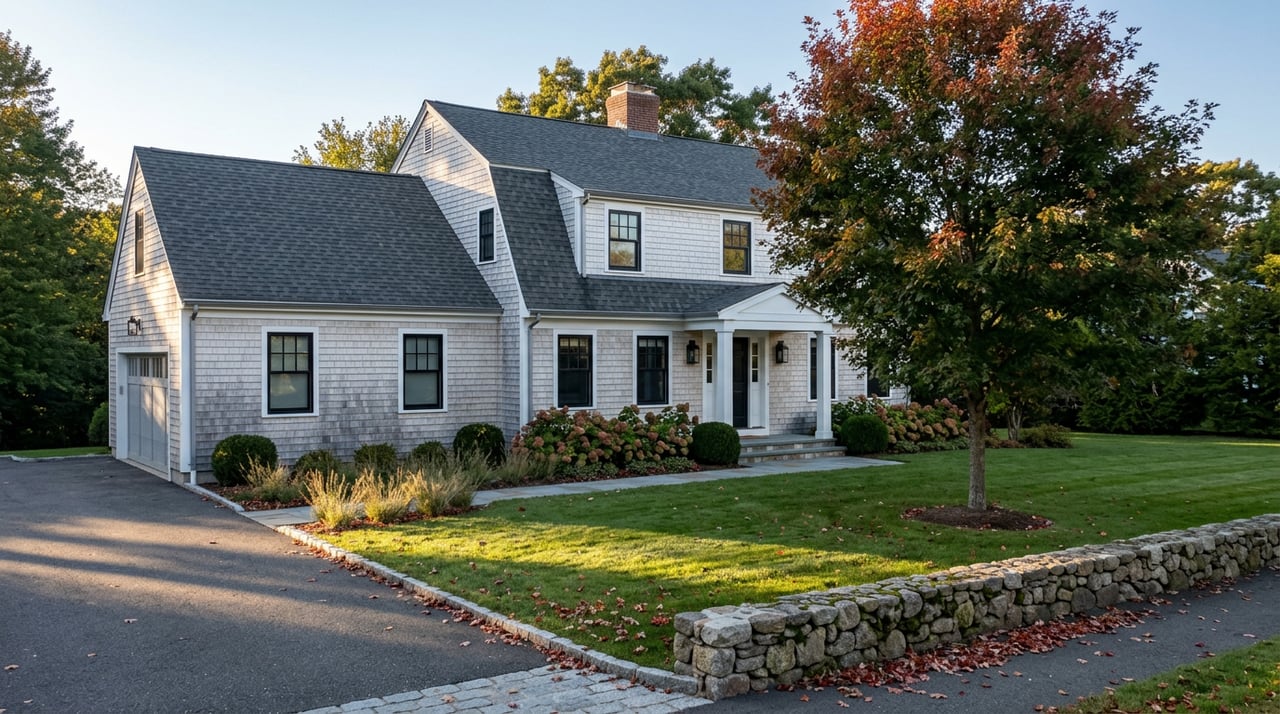
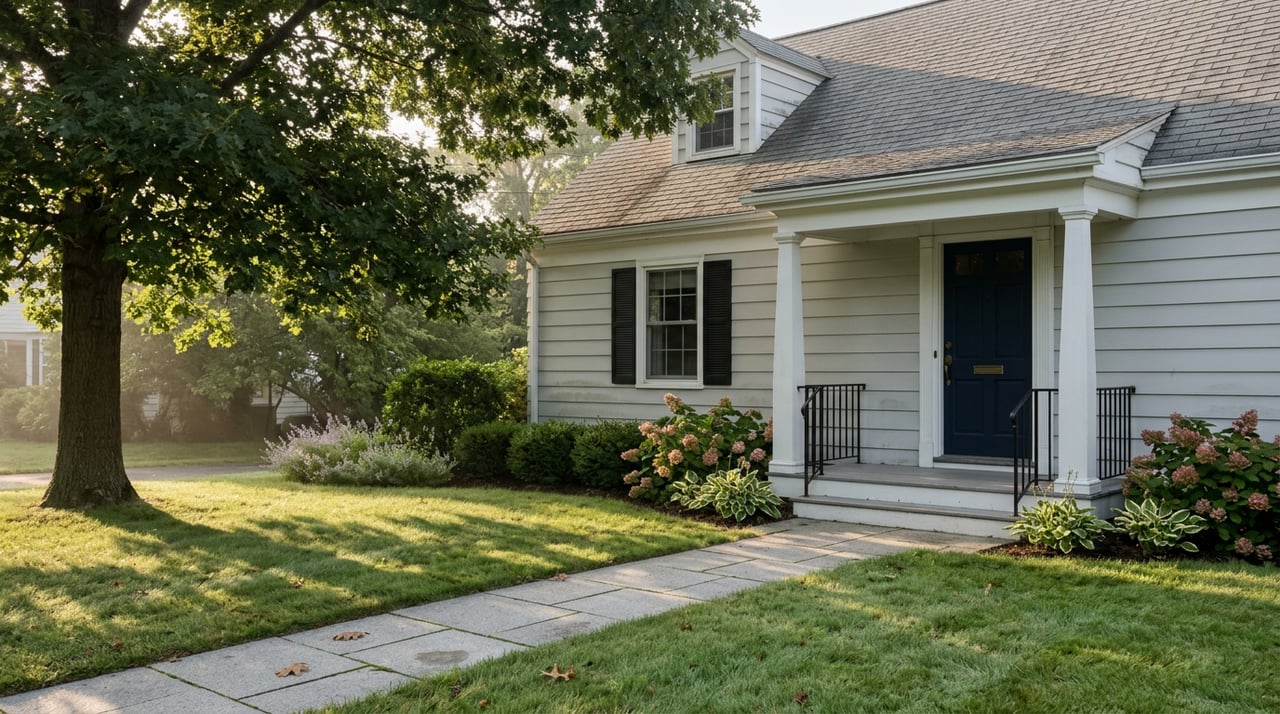
West Medford has long carried an informal designation as one of the city's more established residential pockets: tree-lined streets, larger lots, period architecture, and neighbors like the Brooks Estate and Lawrence Estates enclaves nearby. It has its own stop on the Lowell Line commuter rail into North Station, which for decades made it the answer for buyers who wanted Boston access without giving up a front yard.
The recent numbers tell a different story than that reputation would suggest. As of May 2026, the median sale price in West Medford was $943,683, down 19.9% year over year, according to Redfin. A separate Redfin snapshot for the trailing month put the West Medford median closer to $922,000, still down 5.9% year over year. The two figures don't agree on the exact number, but they agree on the direction: a neighborhood that spent years being treated as Medford's safest bet is currently the one losing ground.
The Neighborhood Nobody Used to Ask About
South Medford sits on the opposite side of that story. It's denser, with more multi-family and condo stock than West Medford, and it sits inside walking distance of the Green Line's E Branch, which opened its Medford stations, Ball Square and Medford/Tufts, on December 12, 2022, as part of the MBTA's Green Line Extension. For most of Medford's real estate history, that part of the city wasn't where buyers started their search.
It's where the momentum is now. In March 2026, the median sale price in South Medford was $903,000, up 9.1% year over year, according to Redfin. Days on market fell to 34 days that same month, down from 58 days a year earlier. That's not just a price story. Homes in South Medford are clearing the market in roughly half the time they were a year ago, which is the kind of shift that shows up in a neighborhood's numbers well before it shows up in its reputation.
Why a Subway Stop Beats a Commuter Rail Stop at the Same Distance
Both neighborhoods sit inside the same city limits, and neither is meaningfully farther from downtown Boston than the other by mileage. What differs is the kind of train waiting at the end of the walk.
The Green Line's E Branch gives South Medford a light rail connection that runs frequently through the day, not just during commute windows, into Somerville, Cambridge, and downtown Boston without a transfer. Boston Magazine has noted that ride takes about 25 minutes from the Medford/Tufts stop. The Lowell Line serving West Medford is commuter rail: built around a peak-hours schedule, with service that thins out considerably outside the traditional 9-to-5 commute. That distinction mattered less when most buyers were routing a single daily trip downtown and back. It matters more now, when a hybrid work schedule means the value of a train stop depends on whether you can actually use it on a Tuesday afternoon, not just a Monday morning.
Put plainly, the market isn't repricing "how close is this to Boston." It's repricing "how many times a week can I actually use this without building my day around a timetable." That's the mechanism behind the split, and it's a more useful way to read Medford's map than a citywide median.
| Area | Median Sale Price | Year-over-Year Change | Days on Market | Primary Transit |
|---|---|---|---|---|
| West Medford | $922,000 to $943,683 (recent months, 2026) | Down 5.9% to 19.9% | Not reported | Lowell Line commuter rail |
| South Medford | $903,000 (March 2026) | Up 9.1% | 34 days, down from 58 | Green Line E Branch (Ball Square, Medford/Tufts) |
| Medford, citywide | $852,000 (three months ending May 2026) | Down 4.8% | 21 days, up from 17 | Mixed: Orange Line, Green Line, commuter rail |
Figures compiled from Redfin data for the periods noted. Different Redfin snapshots for West Medford covered slightly different windows; both point in the same direction.
What This Means If You're Weighing Medford Neighborhoods Right Now
If budget is the binding constraint and you want a traditional single-family footprint with a yard, West Medford's softer pricing may represent room to negotiate that wasn't there two years ago. Go in with a clear-eyed view of the trade-off: you're buying the commuter rail schedule, not the subway one, and that's a real difference for a household that isn't commuting on a fixed 9-to-5.
If daily transit flexibility is what you're optimizing for, South Medford and the immediate Ball Square and Tufts corridor are holding value and moving fast, but the inventory there skews toward condos and multi-family conversions rather than large single-family lots. Know what square footage and outdoor space you're trading for that train stop before you fall for the first listing.
There's a third path worth knowing about too. The Wellington and Station Landing corridor sits on the Orange Line, giving buyers a subway connection without competing directly in the Tufts-adjacent submarket, and it's carried newer condo development in recent years. Medford Square remains the walkable civic center tying these pieces together, and for buyers prioritizing single-family space with outdoor access over transit at all, Lawrence Estates sits closest to the Middlesex Fells Reservation, a different kind of trade-off than either train line offers.
The Citywide Numbers Are Hiding the More Interesting Story
Look only at the citywide figures and Medford looks like a market cooling uniformly: median sale price of $852,000 over the three months ending May 2026, down 4.8% year over year, days on market up modestly from 17 to 21, and 102 homes sold in May 2026 compared with 117 a year earlier. A buyer relying on that top-line number alone would reasonably conclude that timing doesn't matter much right now, that any part of Medford is roughly as soft as any other.
The neighborhood-level data says the opposite. The softening is concentrated in the commuter-rail-only pockets, while the corridor along the new Green Line stations is still compressing days on market and posting year-over-year gains. A citywide median can tell you the temperature of the whole city. It won't tell you which block is actually heating up.
Questions We Hear From Buyers Comparing Medford Neighborhoods
Does the Green Line Extension reach West Medford or Wellington? No. The GLX Medford Branch ends at Medford/Tufts, with Ball Square as the stop just before it. West Medford keeps its existing Lowell Line commuter rail stop, and Wellington keeps its separate Orange Line station. Neither neighborhood gained a new Green Line connection from this project.
Is West Medford still worth buying into? The larger lots, period architecture, and established streets that built West Medford's reputation haven't changed. What's changed is the price a buyer needs to pay for them relative to two years ago, and for a household that isn't tied to a strict downtown commute schedule, that gap may be worth a closer look rather than a pass.
Will South Medford's momentum hold? No one can promise a trend continues, but the mechanism behind it, frequent light rail access that supports irregular commuting patterns, isn't going away. That makes it a different kind of bet than a neighborhood riding a temporary wave of buyer attention.
Talk Through Medford's Map With Someone Who Tracks It Block by Block
A median price tells you almost nothing about which street to actually target, and Medford right now is proof of that. If you're comparing neighborhoods, weighing a commuter rail stop against a Green Line stop, or trying to figure out where your budget stretches furthest without giving up what matters to your household, that's exactly the kind of conversation The Marrocco Group has with buyers across Middlesex County every week. Schedule a complimentary market consultation and we'll walk through the numbers for the specific streets you're considering, not just the citywide average.