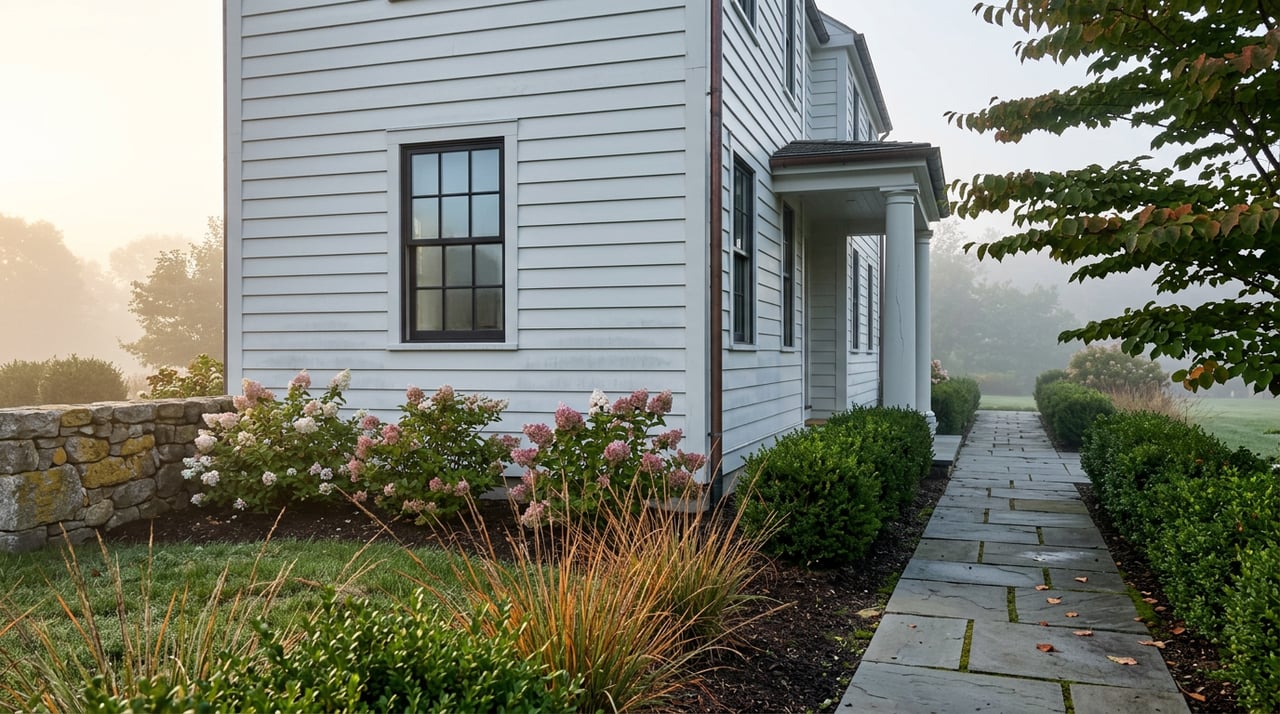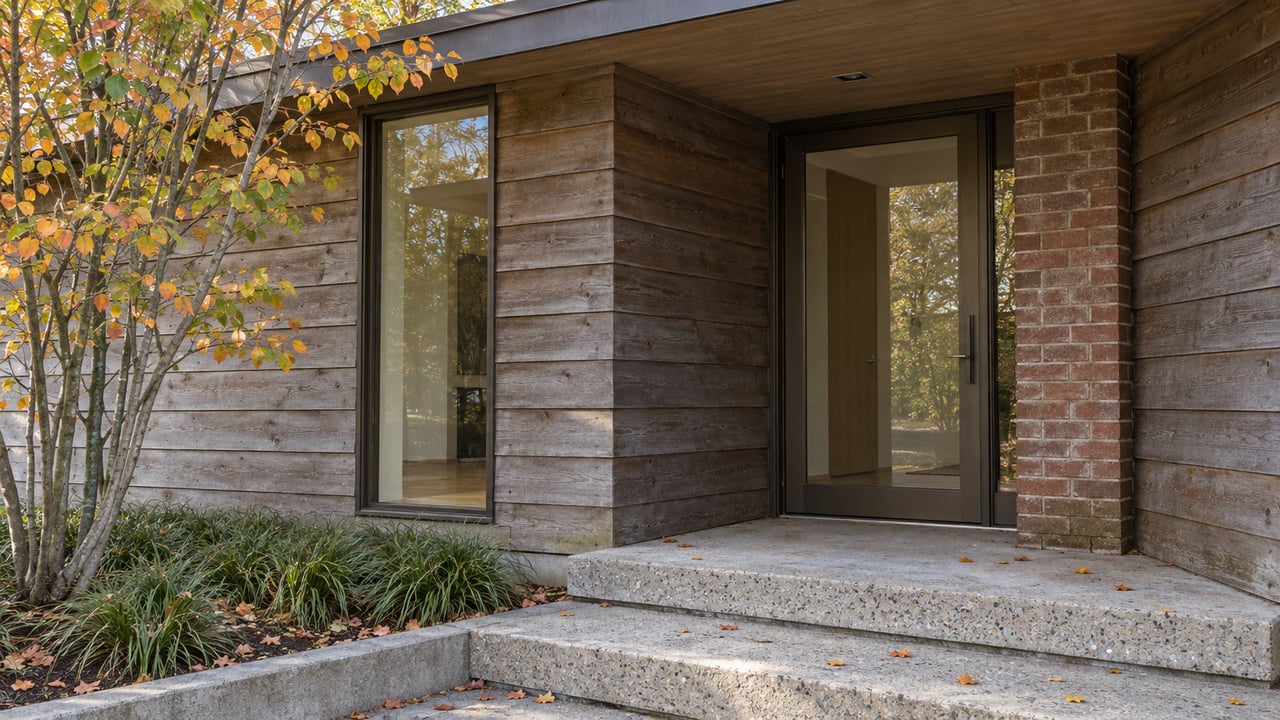
Say you close on a Techbuilt on Demar Road this fall. The house was one of the first Carl Koch designs to go up in what's now called Turning Mill, and the listing agent mentioned its pedigree more than once. A few months in, you want to push the kitchen wall out eight feet and add a shed dormer over the garage. You call the building department expecting a standard permit conversation. Instead you learn the project has to go in front of a commission first, one most Lexington buyers have never heard of and that has nothing to do with the town's famous Battle Green.
That commission, and the bylaw behind it, only exists because of a decision Turning Mill residents made almost a decade ago, and it only applies to two of Lexington's four mid-century modern enclaves. The other two carry a more prestigious label that, on its own, controls almost nothing.
Two kinds of protection that aren't the same thing
Lexington has four official Historic Districts: Battle Green, East Village, Hancock-Clarke, and Munroe Tavern. These were created under a 1956 special act of the state legislature, and the Lexington Historic Districts Commission has final say over any exterior change inside them, including demolition, new construction, color, and signage. None of Lexington's mid-century modern neighborhoods fall inside these four districts.
What Turning Mill and a second neighborhood called Pierce-Lockwood have instead is a Neighborhood Conservation District, created under a different, homegrown bylaw that Town Meeting approved in March 2016 specifically because residents wanted a lighter-touch alternative to the state's Local Historic District process. Turning Mill and Pierce-Lockwood became the first two NCDs in town, both adopted at the April 2018 Annual Town Meeting. In Turning Mill's case, that vote covered 113 parcels across Dewey, Demar, Gould, Grimes, Mountain, Partridge, Turning Mill, and Jeffrey Terrace roads, roughly matching the neighborhood's original footprint of about 150 homes built between 1956 and 1963.
The bylaw's stated purpose is to conserve the buildings and encourage additions that stay compatible with the neighborhood's original character, and it comes with its own commission and its own review triggers, separate from the demolition delay bylaw that applies elsewhere in town.
What actually forces you to stop and ask
Not every change to a Turning Mill house needs a hearing. The Turning Mill NCD bylaw requires Commission review for the demolition of an existing building, or of any structure over 200 square feet of floor area or over 10 feet in height, unless the work is otherwise exempted. That threshold catches a lot of ordinary renovation ambition. An eight-foot kitchen bump and a shed dormer both plausibly cross it. A new deck or a small shed might not.
This is the piece that tends to surprise buyers who assumed "not a historic district" meant "no oversight." Turning Mill isn't a historic district in the state legal sense. It has its own, separate mechanism that can still slow down or reshape a renovation plan, and it exists because the neighborhood asked for it.
Where the prestige actually sits
Meanwhile, three of Lexington's best-known mid-century modern neighborhoods carry a different, more visible credential that does not work the way people assume.
Six Moon Hill, the town's first mid-century modern neighborhood, was designed in 1947 by The Architects Collaborative and includes 26 homes on a wooded cul-de-sac. It was listed on the National Register of Historic Places on January 19, 2016. Peacock Farm, developed in the mid-1950s on an 80-acre former dairy farm with around 60 homes designed by Walter Pierce and Danforth Compton, was listed as the Peacock Farm Historic District on November 21, 2012, the same day the town's broader "Mid-Century Modern Homes of Lexington" context statement was recorded with the National Register.
Those are real, well-documented honors. They are also, according to the town's own historic preservation page, honors that carry no legal weight for a private owner. The National Register listing "places no restrictions on the use, treatment, transfer or disposition of property." An owner in Six Moon Hill or Peacock Farm can repaint, expand, or in some cases demolish without a design commission weighing in on the exterior, something an owner in Turning Mill cannot assume.
Here's how the four designations that touch Lexington's mid-century modern housing stock actually compare:
| Designation | Where it applies | Who reviews changes | What it actually controls |
|---|---|---|---|
| Local Historic District (1956 special act) | Battle Green, East Village, Hancock-Clarke, Munroe Tavern | Historic Districts Commission | Exterior changes, demolition, color, signage, with final jurisdiction |
| Neighborhood Conservation District (Chapter 78/78A, 2018) | Turning Mill, Pierce-Lockwood | Turning Mill NCD Commission | Demolition and additions over the bylaw's size thresholds |
| National Register listing | Six Moon Hill (2016), Peacock Farm (2012) | National Park Service, honorary | No restriction on private use, treatment, or sale |
| Comprehensive Cultural Resources Survey | Any individually listed property townwide | Lexington Historical Commission | Can trigger the townwide Demolition Delay Bylaw if a listed building is proposed for teardown |
The fourth row matters for anyone in Five Fields, Six Moon Hill, or Peacock Farm who assumes National Register status is the whole story. Lexington's Historical Commission has documented more than 1,400 historic resources since the 1970s, and it administers a separate Demolition Delay Bylaw for significant buildings that sit outside the four Historic Districts and outside an NCD. If a house is individually listed on that survey, a demolition proposal can still trigger a hearing and a delay period, even without National Register status doing any of the work. The Comprehensive Cultural Resources Survey was most recently updated in July 2026, so it's worth checking current status rather than relying on an older list.
What this means before you write an offer, or before you list
If you're bidding on a Techbuilt or Peacock Farm-style house inside Turning Mill's boundaries, the practical steps are straightforward:
- Confirm the parcel is one of the 113 included in the recorded NCD, since the boundary map is filed with the Middlesex South Registry of Deeds and not every adjacent lot is necessarily inside it.
- If your renovation plans include demolition of any structure, or an addition over 200 square feet or 10 feet in height, build a Commission review into your timeline before you finalize a contractor's schedule.
- Ask the Turning Mill NCD Commission office directly about smaller projects, since the bylaw allows exemptions and the threshold questions are easier to resolve with the town than to guess at.
If you're looking in Six Moon Hill, Five Fields, or Peacock Farm, the National Register plaque is a credential, not a permit condition. It won't slow down a kitchen renovation. What can still slow down a full teardown is the individual property's status on the town's Cultural Resources Survey, which is worth checking with the Historical Commission regardless of the National Register listing.
For sellers, the distinction cuts the other way. A well-documented Turning Mill house that has already been through NCD review for a past addition carries a cleaner paper trail for the next owner, and the same design guidelines that can slow a renovation are also what keep the vertical cedar siding, glass gable ends, and post-and-beam structure intact, the exact features that make these houses desirable in the first place.
A few questions worth asking early
Does the NCD review apply to interior work? No. The bylaw's triggers are tied to demolition and to structures or additions over the stated size and height thresholds, which are exterior and structural, not interior finishes.
What if my Turning Mill house is on one of the eight listed streets but I'm not sure it's inside the 113 parcels? Check the boundary map recorded with the Middlesex South Registry of Deeds, or ask the NCD Commission office directly before assuming either way.
Does a National Register listing affect financing or resale disclosure? The listing itself imposes no restriction on use or transfer, so it shouldn't create a disclosure obligation on its own. Any separate town survey status is a different question and worth confirming with the Historical Commission if a teardown is part of the plan.
Whichever of these four Lexington neighborhoods you're weighing, the paperwork that actually governs your renovation plans isn't always the one with the plaque. The Marrocco Group works with buyers and sellers across Lexington's mid-century modern enclaves and can help you confirm which review applies to a specific address before you write an offer or list a house for sale.